
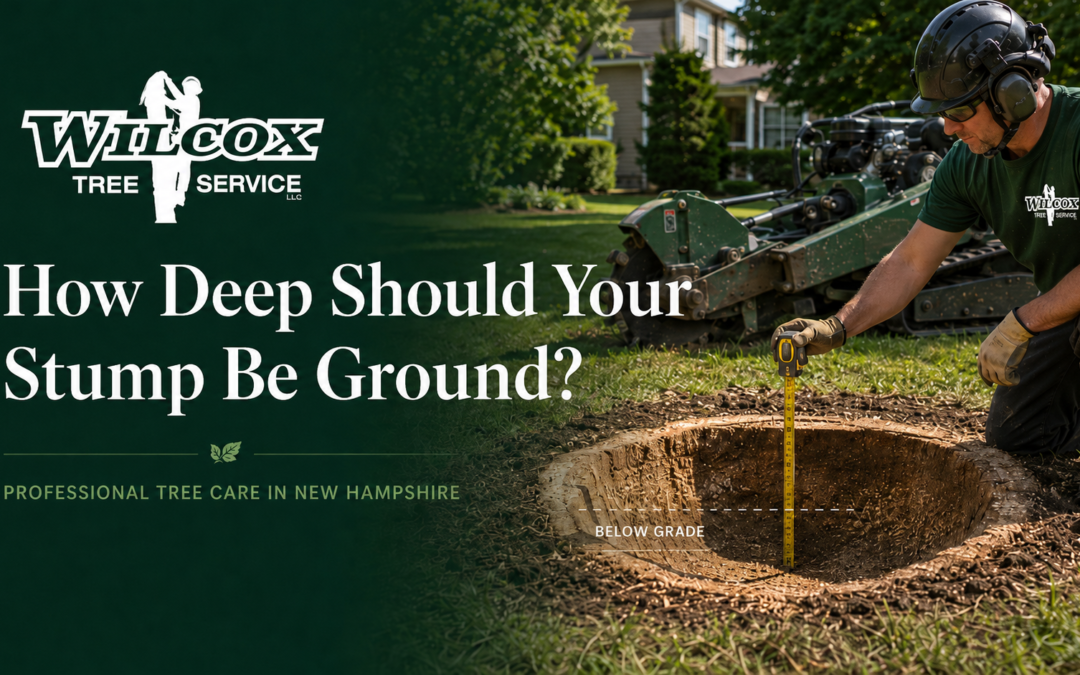
Stump grinding depth isn’t one-size-fits-all. Different future plans for the space call for different grinding depths — and knowing what you want before the grinder arrives saves you from needing a second visit. Here’s the guide from Wilcox Tree Service.
Standard Depth: 6–8 Inches Below Grade
Most residential stump grinding goes 6–8 inches below the surrounding lawn grade. This depth: – Eliminates visible stump – Allows grass to grow over the top – Prevents most resprouting – Provides enough soil depth for normal lawn maintenance – Costs less than deeper grinding
For the majority of residential jobs, this is all you need.
Deeper Grinding: 12–18 Inches
Sometimes you need more depth:
For Landscape Planting (perennials, shrubs): – 12 inches provides enough soil for most shrub root balls – Grindings below this depth decompose over years, creating organic-rich soil – Mix grindings with topsoil for best planting medium
For Sod Over the Spot: – 10–12 inches gives enough depth for quality topsoil above the grindings – Grass establishes faster and stronger
For Light Hardscape (pavers, stepping stones): – 12 inches lets you lay a gravel base and pavers without future settling issues
Very Deep Grinding: 18–24 Inches
For more demanding applications:
For Planting a New Tree Nearby: – Deeper grinding reduces competition from old root remnants – Still better to plant 3–5 feet from the old stump spot, but deeper helps if you must plant close
For Vegetable Gardens: – Root vegetables need deep soil – Old wood chips near the surface can tie up nitrogen
For Structural Hardscape (large patios, walkways): – Prevents long-term settling – Combined with proper gravel base, creates stable foundation
Full Excavation: Not Stump Grinding
If you need the area completely clear of old root material (for foundations, pools, major construction), you’re looking at full stump removal with an excavator — a different service. See our post on stump grinding vs removal.
Factors That Limit Achievable Depth
Rock. New England glacial soils are full of rocks. Our grinders can work around or through small stones but major boulders limit depth. Sometimes we grind as deep as possible, then encounter rock.
Utilities. Gas lines, water lines, electrical, septic — all need to be known and avoided. Call Dig Safe before we arrive on any property where underground utilities might be in play.
Groundwater. If water starts seeping into the grind pit, we’ve reached practical depth. Most residential sites don’t encounter this in summer.
Equipment Access. Larger stump grinders can go deeper more efficiently. Tight-access jobs requiring smaller grinders are sometimes limited in maximum depth.
Pricing by Depth
Most quotes are for standard 6–8” depth. Deeper grinding typically adds: – 12–18”: 25–50% premium – 18–24”: 50–100% premium – 24”+: Custom quote (may approach full-removal pricing)
Tell us your plans when requesting an estimate and we’ll quote the appropriate depth.
What If We Need More Depth After Grinding?
Technically possible but usually not cost-effective. The grinder has to be remobilized, the filled pit re-excavated, and the grinding redone. In most cases, it’s cheaper to grind deeper initially than to revisit.
Common Planning Mistakes
“Just go as deep as possible.” Deeper costs more. If you’re just restoring lawn, you don’t need 18”.
“I’ll figure out my plans later.” If you think there’s any chance you’ll want to plant or pave in that spot, tell us upfront.
“I want the roots completely gone.” Understand that stump grinding at any reasonable depth still leaves lateral roots. For complete root removal, you need full excavation.
Talk Through Your Plans
During our free estimate, mention: – Will this be lawn again? – Planting anything there? – Future construction in the area? – Any underground utilities?
Based on your answers, we recommend appropriate depth and quote accordingly.
Schedule Your Grinding
Call 603-363-8197 or request a free estimate.