
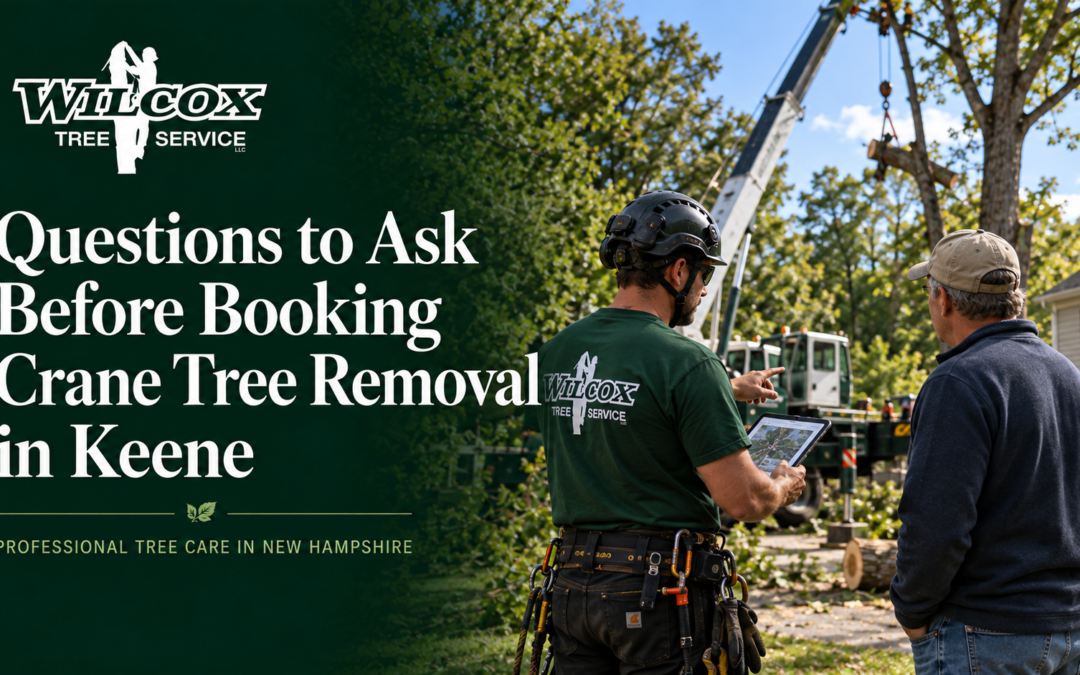
When Marcus and Elena Soto bought their place off Court Street in Keene, the giant Norway spruce in the back corner came with it. For years it was the best thing in the yard, full and green and taller than the house. Then a couple of hard winters split the top, a big limb came down in a March storm, and the whole thing started leaning toward the porch.
They knew it had to come out. They also knew it was too big and too close to the house for anyone to simply climb it and drop the pieces. This was a crane job, and the Sotos had never hired one before.
So Elena did something smart. Before she called anybody, she sat down at the kitchen table and wrote a short list of questions on the back of an envelope. Nothing fancy. Just the things a careful homeowner would want to know before letting a machine that size work over the roof.
Those questions turned out to be the whole game. A couple of companies gave vague answers and talked mostly about getting her on the schedule. When she reached our crane line, we walked through every item on her list before she even finished reading it, and we offered to come look at the tree first.
That is the moment the Sotos relaxed. Not because we told them what they wanted to hear, but because the answers were clear and specific and matched what they were seeing in their own yard.
A short list of good questions does that for you. Here are the ones worth writing on your own envelope before you book a crane removal anywhere in Keene.
Why the Right Questions Save You Trouble Later
A crane tree removal is one of the largest, heaviest jobs that will ever happen on your property, and the honest truth is that a handful of questions up front will tell you almost everything about how the day is going to go. The details that make or break a crane job, the access, the insurance, the lift plan, and the cleanup, all come out the moment you start asking.
Think about what is actually happening. A crane sets up near your home, a trained professional works up in the tree, and heavy sections of trunk and limb get picked up and swung through the air to a drop zone, sometimes right over the roof. When that is planned well, it is calm and almost boring to watch. When it is not, that is when fences get clipped, lawns get torn up, and small problems turn into big, messy ones.
The difference almost always comes down to planning. A crane removal that has been thought through in advance looks effortless, because the hard work happened before the truck ever arrived. The questions you ask are really a way of finding out whether that thinking has been done, or whether the crew plans to figure it out once they are standing in your yard.
So the questions below are not about tripping anyone up. They are about listening to how a company answers. A crew that runs safe, tidy crane removals will give you straight, specific answers and will not get squirrelly when you ask about coverage or the plan. If the answers are vague, rushed, or all about getting you on the schedule, that tells you something too.
Questions About Safety and Insurance
Start here, because everything else rides on it. A crane lifts thousands of pounds of wood over your house, your driveway, and sometimes your neighbor’s yard. Before you talk about dates or anything else, you want to know that the company carries real coverage and that someone who has done this many times is the one making the calls.
Is the Company Fully Insured for Crane Work
This is the first question for a reason. Ask flat out whether the company carries liability insurance and workers’ compensation, and whether that coverage includes crane operations. That last part matters more than people realize, because some general tree policies do not extend to lifting work. If a section of trunk swings wrong and cracks a roof, or the crane leaves a mark on the driveway, you want the company’s coverage handling it, not yours.
It helps to know what that coverage actually protects. Liability covers damage to your property or a neighbor’s, whether that is the roof, a vehicle in the driveway, a fence, or a garden shed. Workers’ compensation covers the crew if someone is hurt while working on your land, which keeps that responsibility off you as the homeowner. On a big lift, both matter, and both are fair to ask about.
A company that runs crane jobs the right way will not flinch at any of this. They will offer to send a certificate of insurance, and they will be glad you asked. Any hesitation, any story about why they cannot show you paperwork, is your answer. On a job this size, you are well within your rights to see proof before anyone goes up into the tree.
Who Plans the Lift and the Access
The second safety question is about planning. Ask who figures out where the crane sets up, how much each piece weighs, and the order the tree comes apart in. On a real crane removal, none of that is improvised in the driveway on the morning of the job. Someone experienced looks at the tree, the ground, the overhead wires, and the space around the house, then builds a plan around the weight of each pick.
A good sign is a company that wants to come see the tree before the day of the work. Weight is the whole ballgame, because a crane has limits, and a smart plan keeps every lift comfortably inside them. When you ask who plans the lift and hear a clear, confident answer, you are talking to people who treat the job like the serious piece of work it is, not a guess they will sort out once they arrive.
Questions About the Day and the Site
Once safety and insurance check out, the next round of questions is about how the actual day will run. This is the part homeowners usually forget to ask about, and it is exactly what people search for once they get serious, that practical what to ask before crane tree removal list. A few minutes here saves a lot of surprise later.
Ask where the crane will set up. Depending on your lot, it might sit in the driveway, out on the street, or on the lawn with mats laid down to spread the weight and protect the ground. If it needs to park on a public street here in Keene, ask whether a permit or a brief road closure is part of the plan, and who arranges it. Good companies handle that for you and tell you ahead of time so it is never a surprise.
Ask how long the job will take. Many residential crane removals wrap up in a single day, and plenty go faster than that, but the honest answer depends on the tree. Ask what they need from you before they arrive, whether that is moving cars out of the driveway, unlocking a gate, or clearing patio furniture and toys out of the yard.
It is also fair to ask who will actually be on your property that day. On a crane removal, you want the crew that looked at the tree to be the same crew running the job, and you want a crane operator who is comfortable working with tree crews, not one borrowed from a job that has nothing to do with trees. Knowing the same familiar team is handling the whole thing from start to finish is a big part of feeling settled about a job this size.
It is fair to ask how they protect the ground and the landscaping. Crane outriggers put a lot of pressure on a small footprint, so a careful crew uses mats or plywood underneath and plans a path that avoids your septic area, your well cover, and soft spring ground. If you have garden beds, a walkway, or a patio near the tree, point them out and ask how those will be kept clear of falling wood.
Ask about the neighbors, too. Because a crane arm can swing near a property line, a thoughtful crew will talk with you about whether they need brief access to a neighbor’s side or simply a heads-up so nobody is startled by the noise. That kind of coordination is a hallmark of a company that has done a lot of tight, in-town removals, the same care you want on any hazardous tree removal where the margins are small.
Finally, ask what happens if the weather turns. Wind is the big one for crane work, and a professional will not lift in conditions that make it unsafe. Hearing that a company is willing to reschedule for weather is a good thing, not a red flag. It means they put the plan and your property ahead of rushing to finish the job.
Questions About Cleanup, Wood, and the Stump
A tree is only half the job. The other half is what your yard looks like when the crew pulls out of the driveway. This is worth asking about clearly, because the word removal can mean very different things to different companies.
Ask what happens to the wood and the brush. Will the limbs be chipped and hauled away, and do you want the larger trunk sections cut into rounds and left for firewood? Some folks want every last scrap gone, and others are happy to keep a winter’s worth of wood. There is no wrong answer, but you should be the one who decides, not the crew guessing on the spot.
Ask how they leave the site. A good outfit rakes up, blows off the driveway and the walkways, and does a real walk-around before calling it done. If the crane sat on the lawn, ask how they handle any ruts or soft ground so you are not left staring at torn-up grass all summer. It is also fair to ask whether hauling and cleanup are part of the job or handled separately, so the finished yard matches what you pictured when you booked.
Then ask about the stump, because a crane removal almost always leaves one behind. Getting the tree down and getting the stump gone are two different steps, and it helps to know up front whether grinding is offered as a follow-up so you are not left with a fresh trip hazard in the middle of the yard. At Wilcox Tree Service, we usually talk through the wood, the cleanup, and the stump before the job even starts, because lining up stump grinding as the natural next step turns that raw corner back into usable lawn instead of a problem you look at for months.
None of these are hard questions. They just make sure everyone is picturing the same finished yard before the work begins.
How Wilcox Crane Service Answers Every One in Keene
Here is the part we are proud of. By the time most homeowners finish reading their list to us, we have already answered half of it, because these are the exact things we would want to know if it were our own house. When you call our crane line, we do not rush you toward a date. We talk through the tree first.
We are glad to show proof of insurance for our crane work, and we would rather you ask than wonder. Before the day of a removal, someone comes out, looks at the tree and the whole site, and builds a plan around the weight of each pick and the room we have to work in. We walk you through where the crane will sit, how we protect the lawn and the beds, what we do with the wood and the brush, and how the stump gets handled after. If the weather looks wrong, we say so and we move the date.
Being based right here means we know Keene’s neighborhoods, the narrow in-town lots, the older streets, and the tight spaces between houses where a crane tree removal in Keene is often the safest way to get a big tree down without wrecking the yard. We would rather spend ten minutes answering your questions and have you feel completely sure than book a job you feel uneasy about. That is how the Sotos ended up choosing us, and it is how we like to work with every family across the Monadnock Region.
Have questions before your Keene crane removal? Call Wilcox Tree Service at 603-903-8624 and we will walk you through it.
Frequently Asked Questions
- What should I ask before booking a crane tree removal in Keene?
Start with safety and insurance, then move to the day itself and the cleanup. Ask whether the company is fully insured for crane work, who plans the lift and the access, where the crane will set up, how long the job takes, and what happens to the wood, brush, and stump. Clear, specific answers to those few questions tell you almost everything you need to know.
- How do I know a crane tree company is properly insured?
Ask directly, and ask specifically about crane operations. The company should carry both liability insurance and workers’ compensation, and be willing to send you a certificate of insurance on request. A crew that runs crane jobs the right way shares that paperwork without hesitation. Any excuse for why they cannot show it is a warning sign on a job this size.
- Who plans where the crane goes on my property?
An experienced professional should, ideally after visiting your property before the work day. They look at the tree, the ground, the overhead wires, and the space around the house, then decide where the crane sets up and figure the weight of each pick. On a well-run job, none of that is guessed at in the driveway on the morning of the removal.
- Does the company handle the wood, debris, and stump?
A good company does, but you should confirm the details before booking. Ask whether the limbs are chipped and hauled, whether you want trunk rounds left for firewood, and how they leave the site. The tree removal and the stump are two separate steps, so ask whether stump grinding is offered as a next step to clear that last trip hazard from the yard.
- How far ahead should I book a crane removal in Keene?
For a planned, non-emergency removal, it helps to call a couple of weeks ahead, especially during the busy fall and winter storm seasons around the Monadnock Region. That gives us time to come look at the tree and plan the lift properly. For a leaning or storm-damaged tree that is an immediate hazard, call our crane line right away and we will prioritize it.
- Does Wilcox Crane Service explain the plan before the job?
Yes, always. Before a crane removal, we come out, look at the tree and the site, and walk you through the whole plan, where the crane sits, how each piece comes down, how we protect your yard, and how the cleanup and the stump are handled. If you have questions before booking, call Wilcox Tree Service at 603-903-8624 and we will walk you through it.