
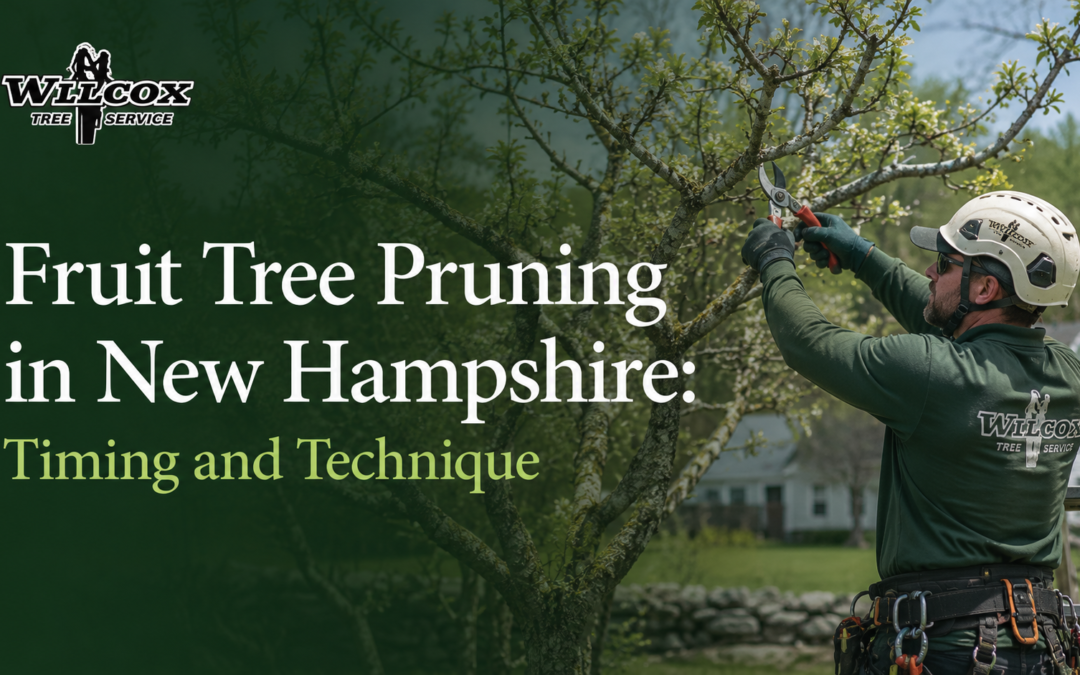
New Hampshire has a long tradition of home orchards — apple trees on old farmsteads, backyard pears, even heritage varieties preserved for generations. If you have fruit trees on your property, annual pruning is the single most important maintenance task. It affects yield, fruit size, disease resistance, and long-term tree health. Here’s the guide from Wilcox Tree Service.
Why Fruit Trees Need Annual Pruning
Unlike shade trees (every 3–5 years), fruit trees genuinely need annual work. Benefits: – Larger fruit (fewer fruit per branch = more size) – Better fruit color and flavor (more light reaching fruit) – Reduced disease (better air circulation) – Stronger structure (branches sized to hold fruit weight) – Easier harvest (fruit within reach) – Longer productive life (well-pruned trees produce 20+ years)
Unpruned fruit trees produce smaller, poorer-quality fruit, develop disease problems, and decline prematurely.
The NH Pruning Calendar
Late winter (mid-February through March): IDEAL WINDOW – Trees are dormant – Frost risk to pruning wounds minimal – Structure is visible – Minimal disease pressure – Time before spring bud break to heal
Early spring (April, before bud break): Acceptable – Still dormant in most of NH – Last chance before active growth
During bloom: AVOID – Disrupts pollination – Can damage flowering spurs
Summer: Light work only – Water sprout removal – Minor corrections – Disease-affected branch removal
Fall: AVOID – Stimulates late growth vulnerable to cold – Attracts disease during wet season
The Basic Annual Plan
Step 1: Remove the 4 D’s – Dead branches – Diseased branches (cut 6 inches into healthy wood) – Damaged branches (storm damage, cracks) – Disoriented branches (growing wrong direction)
Step 2: Remove Structural Problems – Watersprouts (vertical shoots from branches) – Suckers (shoots from the base/roots) – Crossing or rubbing branches (remove one) – Branches growing into the center
Step 3: Size Management – Shorten branches growing too long – Reduce height if needed – Maintain planned shape (central leader, open center, or modified)
Step 4: Thinning for Fruit Quality – Remove spurs on overloaded branches – Let light into lower branches – Maintain fruiting wood distribution
Common Fruit Tree Shapes
Central Leader (apples, pears): One main trunk with scaffold branches at levels. Most cold-hardy approach.
Open Center (peaches, plums): Multiple scaffold branches, no central leader. Better for quick-producing stone fruits.
Modified Central Leader: Central leader early, then topped to encourage horizontal spread. Combines benefits of both.
Disease Management Through Pruning
Many fruit tree diseases (apple scab, fire blight, brown rot, cedar-apple rust) are partially managed by pruning: – Remove cankers and diseased wood – Increase air circulation – Eliminate overwintering fungal material – Sterilize tools between trees (denatured alcohol or bleach solution)
Neglected Fruit Trees: Restoration Pruning
If you’ve inherited an overgrown apple tree, it can often be restored — but slowly: – Year 1: Remove only the worst deadwood and problem branches – Year 2: Begin opening the canopy, remove watersprouts – Year 3: Continue shaping, reduce height selectively – Year 4: Maintenance level pruning
Attempting full restoration in one year severely stresses the tree and often fails.
When to Call a Professional
Fruit tree pruning is one of the home maintenance tasks more homeowners can reasonably do themselves — if the tree is small and accessible. Call us when: – Tree is over 15 feet tall – Tree has been neglected for years – Heritage or specimen varieties you don’t want to damage – Storm-damaged fruit trees – Large orchards needing efficient work
Get Your Fruit Trees Ready for the Season
Late winter is here before you know it. Book your fruit tree pruning now. Call 603-363-8197 or request a free estimate.