
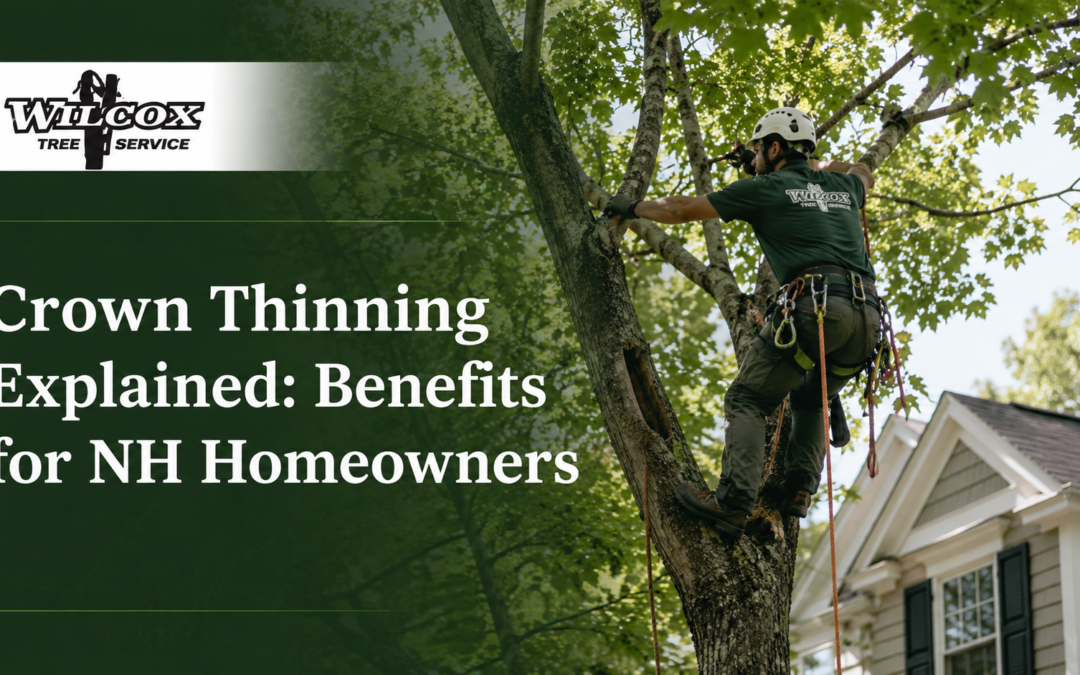
Crown thinning is one of the most valuable — and most misunderstood — pruning services. Done well, it improves tree health and reduces storm damage risk. Done poorly, it weakens structure and triggers defensive regrowth. Here’s what crown thinning actually is, when it helps, and how Wilcox Tree Service approaches it.
What Crown Thinning Really Means
Crown thinning is the selective removal of small live branches throughout the canopy to reduce overall density — without reducing the tree’s overall size or shape.
What it is: –
Selective removal of 10–20% of small live branches
– Focused on removing competing, weak, or crowded branches
– Preserves the tree’s natural shape
– Distributes remaining foliage evenly
What it is not:
– Removing every other branch (too aggressive)
– Stripping interior branches (lion’s tailing — wrong)
– Reducing overall tree size (that’s crown reduction)
– Removing entire sections (also not thinning)
The Key Benefits
- Better Air Circulation. Denser canopies trap humidity, creating conditions for fungal diseases like powdery mildew, anthracnose, and leaf spots. Thinning lets air move through, drying leaves and reducing disease pressure.
- Better Light Penetration. A thinned canopy lets more light reach interior branches and what’s beneath the tree. Interior branches stay healthier; grass and plantings below grow better; reduced shading conflicts with your landscape.
- Reduced Wind Resistance. A dense canopy acts like a sail in high winds. Thinning reduces wind loading, which reduces branch failure risk, reduces whole-tree uprooting risk, and decreases storm damage likelihood.
- Weight Reduction on Weak Unions. Trees with codominant stems or included bark at junctions benefit from reduced weight on those weak points. Thinning distributes stress more evenly.
- Improved Aesthetics. Thinned canopies look more graceful and allow the tree’s natural structure to show through. Specimen trees especially benefit.
Which Trees Benefit Most
- Large mature trees with dense canopies
- Fast-growing species prone to overcrowding (silver maple, Norway maple)
- Storm-vulnerable species (white pine, some oaks)
- Trees over structures where reduced wind loading protects the home
- Trees with disease pressure that benefits from better airflow
Which Trees Don’t Need Thinning
- Naturally open-canopy species (oaks with clear structure, birches)
- Young trees still developing — need formative pruning instead
- Already-stressed trees — thinning can worsen decline
- Trees where shading is desired (patios, driveways)
How Much Can Be Thinned Safely?
Industry guideline: no more than 25% of live canopy in a single year. Most professional thinning targets 10–15% — enough to see benefits, not enough to stress the tree.
Over-thinning causes: – Sun scald on exposed bark – Defensive watersprouting (ugly vertical growth) – Reduced photosynthesis – Increased stress susceptibility
Proper Thinning Technique
The rules we follow:
- Remove from the outside in — thin at branch tips, not the tree interior
- Target weak, crossing, or competing branches specifically
- Preserve the tree’s natural form
- Make cuts at branch collars for proper healing
- Step back frequently to assess balance
Frequency
Most trees that benefit from thinning need it every 3–5 years. More often can stress the tree; less often allows density to rebuild.
When to Schedule
The dormant season (late fall through early spring) is ideal for most species. See our tree trimming team for species-specific timing.
Get a Thinning Assessment
Call 603-363-8197 or request a free estimate. Our team will tell you honestly whether thinning is right for your trees.